Odoo's Artificial Intelligence

The artificial intelligence module in Odoo 19 represents a shift toward a proactive, conversational ERP system. This version integrates AI across the board, making it possible to create intelligent agents custom bots that perform tasks using natural language.
Its features include automatic content generation (emails and descriptions), auto-completion of fields based on historical templates, and predictive sales analysis.
Important Note Regarding Costs
OCR only uses Odoo IAP credits. Generative AI features (text, chatbot, descriptions) use your own account OpenAI, Claude, or Gemini.
"Odoo's AI generated a description for me that any intern could have written using Google."
This comment, which is appearing more and more frequently on user forums, sums up the frustration of those who were expecting something magical but found only off-the-shelf models.
The artificial intelligence built into Odoo promises to revolutionize business management, but the reality is more nuanced. Many companies do not fully understand What Uses IAP Credits and What Doesn't: Only invoice OCR uses Odoo credits, while generative AI tools (descriptions, chatbot, etc.) are charged to your own account OpenAI, Anthropic, or Google. The problem lies not in the technology, but in the way it is configured and, above all, in our understanding of it When to Use It and When NOT to Use It.
In Dynapps, we've implemented hundreds of projects in which AI played a decisive role, and others where it turned out to be an unnecessary expense. We’ll explain the difference: which built-in features are worth it, how to configure them so they actually save time, and when it’s better to integrate external APIs such as OpenAI, Anthropic (Claude) or Google Gemini for tasks that require true customization.
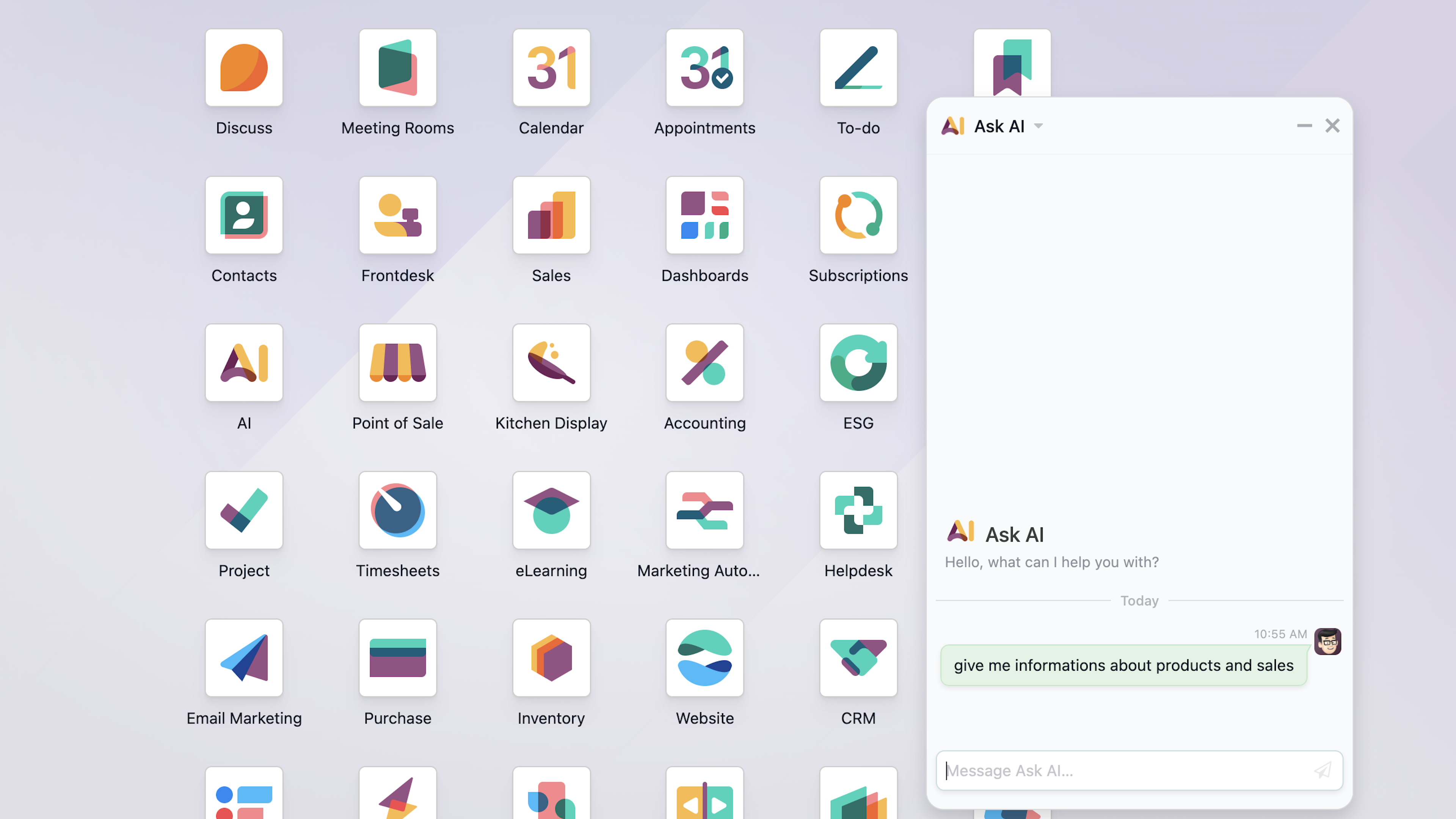
The Real Problem: Confusion Between Costs and General-Purpose AI
There is a great deal of confusion regarding the system of IAP credits Odoo's (Integrated Purchasing) module. It's actually simpler than it seems: Only the OCR feature for invoices and documents uses IAP credits. Other AI features (text generation, chatbots, assistants) use your own account with the provider you set up: OpenAI, Anthropic (Claude), Google Gemini, or others.
Document OCR → Odoo IAP Credits: Odoo prepayment system for digitizing invoices and documents.
Generative AI (text, chatbot) → Your own account: You set up your OpenAI, Claude, or Gemini API key, and the cost is charged directly to your account.
Predictive Lead Scoring → No Additional Fees: Uses Odoo's internal algorithms without using credits or relying on external APIs.
The a real challenge It's not a matter of cost, but of configuration. The default AI features generate generic responses because they lack any context about your business. Let's see how to fix that.
Features That Actually Work
OCR for Vendor Invoices
Extracts structured data from PDF files with high accuracy. Uses IAP credits (the only service that does this).
Predictive Scoring of Prospects
Analyze conversion history and prioritize the opportunities most likely to succeed.
VoIP Call Transcripts
Converts audio to text and generates automatic summaries for the customer's history.
Classification of Expenditures
Identifies trends in tickets and automatically assigns accounting categories.
Classification of Support Tickets
Automatically assigns categories and priorities to incoming tickets based on their content.
AI Agent for Live Chat in E-commerce
A chatbot that describes product features and guides customers through the purchasing process.
Functions with an uncertain return on investment
Generating Generic Descriptions
Without a brand context, this results in generic copy that doesn't help set your product apart.
Chatbot without machine learning
Default responses are so impersonal that they can negatively impact the customer experience.
OCR on simple documents
Using AI for simple, standardized invoices uses up credits without adding any value.
Tips for Sending Bulk Emails
Without prior segmentation, AI suggestions are too generic to enable effective campaigns.
6 AI-powered automations that really save time
After implementing dozens of AI-based projects in Odoo, we have identified the automations that on a consistent basis generate positive feedback. What they have in common: they all work with structured data and repeating patterns.
1. Smart Digitization of Vendor Invoices
Where does it work: In the Odoo Accounting module, OCR scanning of invoices is one of the features that offers the best return on investment. The system automatically extracts the supplier name, date, line items, taxes, and totals from any PDF or image file.
How to optimize it: Be sure to configure recurring vendors correctly and validate the first documents for each format. The system is optimized for standard European invoice formats and works better with high-quality PDF files than with scanned images.
When should you avoid it: If you receive invoices from a single supplier in a very simple format (name, description, total amount), manual processing may be faster. Evaluate the balance between volume and complexity.
2. Prospect Scoring Using Predictive AI in the CRM
Where does it work: The module for Odoo CRM It can analyze your history of won and lost opportunities to assign a predictive score to each new prospect. This score indicates the likelihood of conversion based on actual trends in your business.
How to optimize it: You must have a history of at least 200 to 300 closed opportunities (won and lost) with high-quality data: industry, company size, lead source, and sales cycle length. The more fields you fill in, the more accurate the prediction will be.
Expected result: Sales teams that prioritize high-scoring prospects report a an increase of 20 to 30 percent in terms of conversion rates, simply to focus our efforts where the chances of success are highest.
3. Automatic transcription and summary of VoIP calls
Where does it work: With the module Odoo VoIP v19, AI can transcribe phone conversations and generate executive summaries that are automatically saved in the customer file. This eliminates the need to take notes during the call.
How to optimize it: Set up transcription only for calls lasting longer than 2 minutes. Short calls (confirmations, transfers) generally do not provide useful information, and using credits for these calls reduces your return on investment.
Ideal use case: Help desk and support teams that need to log incidents without wasting time writing up a report after the call.
4. Automatic classification of expenses and receipts
Where does it work: In the Expense Management module in Odoo, AI analyzes scanned expense receipts and suggests the corresponding accounting category based on the nature of the expense, the amount, and the vendor.
How to optimize it: Define clear and consistent categories in your chart of accounts. AI works best when there are a few distinct categories rather than dozens of similar subcategories.
Expected result: Reducing the processing time for expenses related to 60 to 70%, particularly in companies where sales teams generate a large number of expense reports for travel expenses, per diem allowances, and entertainment expenses.
5. Creating product descriptions that reflect the brand's context
The common pitfall: Using the description generator "as is" produces generic text. The solution is to put into context in the AI's command line before it generates content.
How to optimize it: In Odoo 18/19, you can set up automated actions that incorporate information about your brand into the prompt: communication style, target audience, key benefits, and examples of effective descriptions. This helps you move from a generic result to one that aligns with your brand identity.
Advanced option: Connecting to the OpenAI, Anthropic (Claude), or Google Gemini API using your own key allows you to fine-tuning the template with your actual catalog to create descriptions that sound like they were written by your best salesperson.
6. Automatic Classification of Support Tickets
Where does it work: In the Odoo Help Desk module, AI can analyze the content of incoming tickets and automatically assign categories, priorities, and responsible teams. This automation makes it possible to We have deployed it to production with excellent results.
How to optimize it: Define clear, mutually exclusive categories. Provide examples of tickets for each category in the configuration prompt. AI works best when categories are specific (“Billing Issue,” “Technical Error,” “Sales Inquiry”) rather than generic (“General,” “Other”).
Expected result: Reducing the duration of the initial triage in a 80% and improved initial response times by assigning tickets to the right team from the start.
When to Integrate External APIs: OpenAI, Anthropic, and Gemini
Don't forget: most of the AI features in Odoo They're already using it on your account of the provider you're setting up. You can choose between OpenAI (ChatGPT, GPT-4, etc.), Anthropic (Claude 3.5 Sonnet, Opus, Haiku), or Google Gemini, depending on your needs. The advantages of each:
Use Cases Where External APIs Make a Difference
AI Agent for Live Chat in E-commerce
A chatbot integrated into your online store that helps customers by explaining product features, comparing options, answering their questions about shipping, and guiding them through the purchasing process. Connect your product catalog to Claude, GPT-4, or Gemini to get context-aware responses.
Customer service chatbot trained using your knowledge base
By connecting Claude, GPT-4, or Gemini to an index that compiles your FAQs, product documentation, and internal policies, the chatbot can answer questions specific to your company—not just generic phrases.
Sentiment Analysis in Support Tickets
Automatically process incoming tickets to identify urgent cases, instances of frustration, or expressions of satisfaction, by prioritizing responses and alerting supervisors when necessary.
Creating Customized Sales Proposals
Feed the model with the customer's data, purchase history, and industry to generate recommendations that directly address their needs, rather than generic suggestions.
Data Extraction from Complex Documents
For contracts, legal agreements, or technical documentation that standard OCR cannot process correctly, models such as GPT-4 with vision capabilities can extract structured information from non-standardized formats.
Practical Configuration Guide
Key Steps for Optimizing AI on Your Odoo Instance
1. Assess your current IAP usage
Go to Settings > In-App Purchases and review your transaction history. Identify the features that use up the most credits and determine whether the value they generate justifies this expense. If you can't quantify the time saved, there probably isn't any.
2. Disable non-essential AI features
In modules such as “Sales” or “E-commerce,” you can disable automatic content generation if it is not configured correctly. It’s better not to use AI at all than to use it when it’s configured incorrectly.
3. Set up usage alerts
Set up notifications when your IAP credits fall below a certain threshold. This allows you to detect unusual usage before it becomes a budget issue.
4. Set the context for your brand when using prompts
Please provide: tone, target audience, key selling point, and 5 to 10 sample texts that illustrate your style. This document will serve as the basis for customizing any AI prompt, whether native or external.
5. Practice before moving on to the next level
Before implementing an automated process company-wide, test it within a small team or department for 2 to 4 weeks. Evaluate turnaround times, errors, and satisfaction levels before rolling it out on a large scale.
Discover what Odoo AI can do for your business.
An initial meeting to see if we're on the same page, as well as a demonstration tailored to your processes.
More posts like this

6 minute read
Choosing an Odoo integrator: 5 questions to ask
There are generally five main criteria that can help you effectively evaluate Odoo integrators. However, a reliable assessment depends first and foremost on what you’ve prepared before the call.

3-minute read
Interview with Leïla Chojnacki, Deputy CEO and CFO of the Obiz Group
3 minute read
Odoo 19.4: What's new? Key features and essential takeaways
Odoo 19.4 (July 2026) is a quarterly update: connection to AI agents via MCP, voice interaction, editable margins, two-tier duplicate detection, stock aging report, and continuous production.
3 minute read
AI in Odoo: What are the requirements for enabling it?
The question "Do we have the right to use Odoo's AI?" often has a simpler answer than expected.

4 minute read
Electronic invoicing 2026: Odoo and Dynapps France are ready
Electronic invoicing 2026 is just around the corner: discover how Odoo and Dynapps France are helping you prepare today for this essential transition.

3 minute read
La méthode Dynapps pour un projet Odoo réussi
Choosing an ERP is about more than selecting software. The success of an Odoo implementation also depends on understanding your business challenges, structuring your processes, supporting your teams, and ensuring the solution evolves alongside your business over time.

4 minure read
Certified by Dynapps: Bringing Odoo Expertise to Local SMEs in France
Dynapps France is launching the “Certified by Dynapps” label, a program that provides small and medium-sized businesses with local Odoo expertise and offers independent consultants a structured framework for growing their Odoo-related businesses.
4 minute read
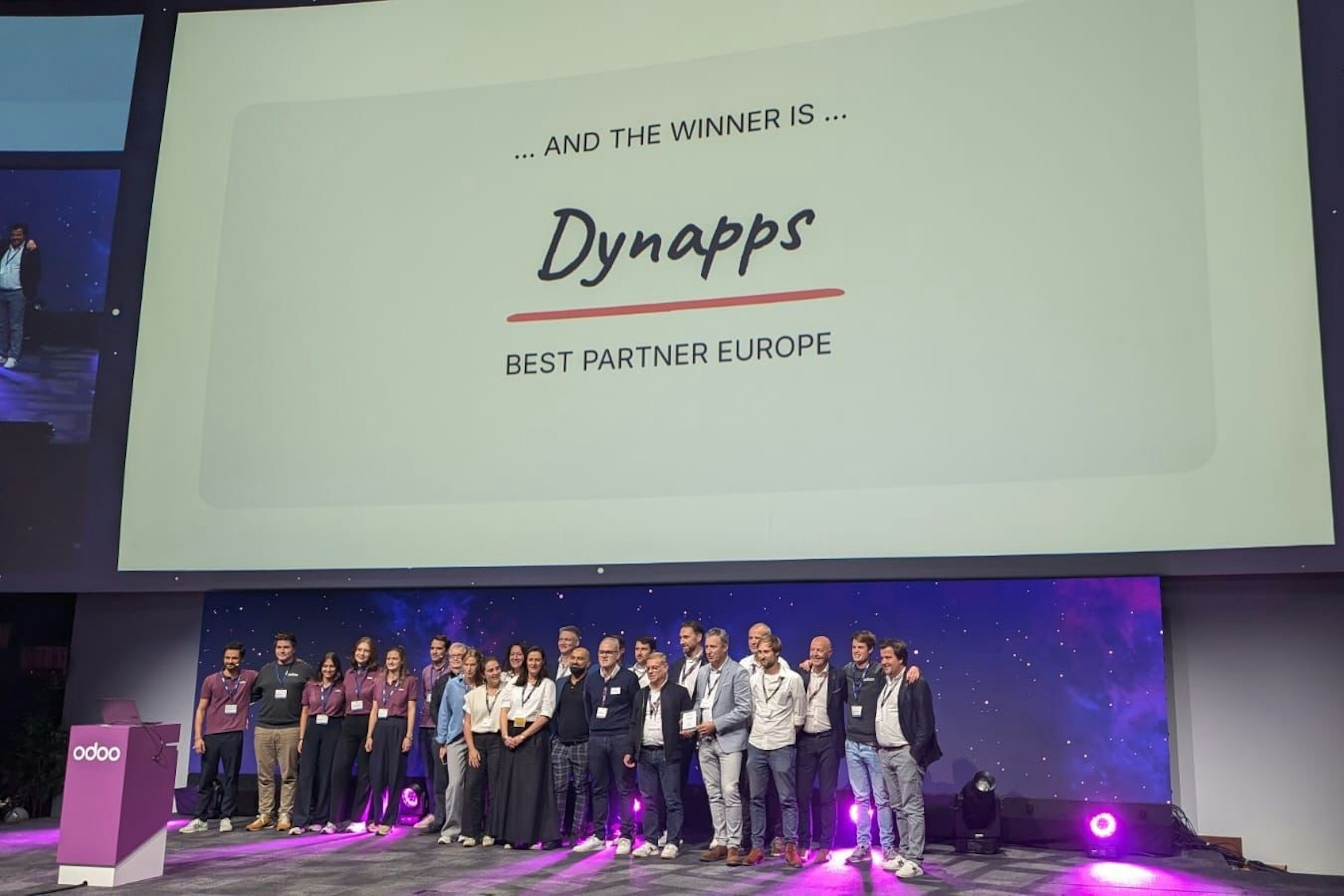
Dynapps named Best Odoo Partner in Europe
At the Odoo Experience Days in Brussels, Dynapps won the title of Best Odoo Implementation Partner in Europe, with former CEO Karel Hendrickx and the team collecting the award on 2–4 October 2024.
4 minute read
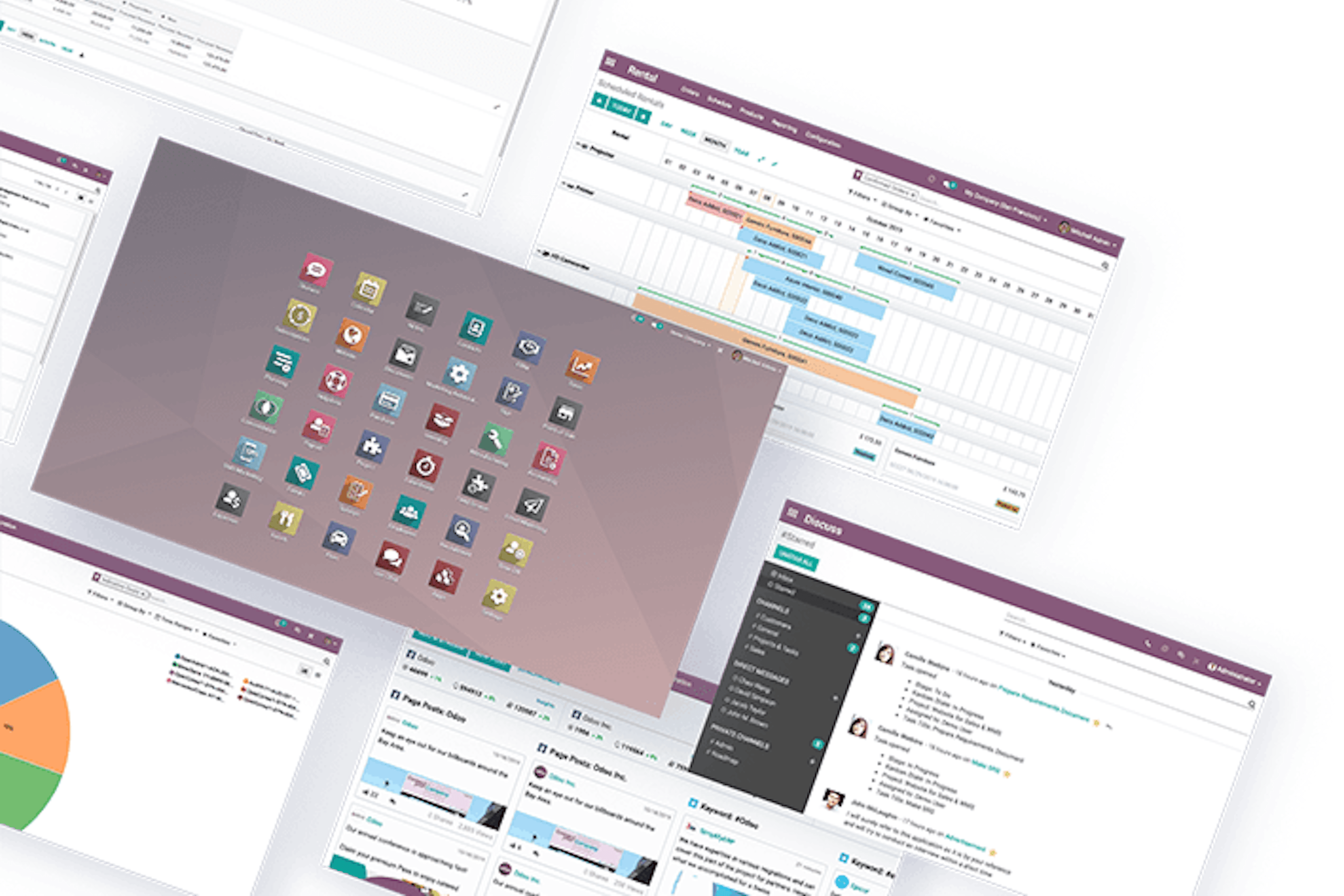
ERP vs CRM: what is the difference?
In a competitive market, businesses lean on software to operate efficiently. Two systems come up most: ERP and CRM. They serve different purposes, and they often work better together than apart.
4 minute read
What does it mean to be an Odoo Gold Partner?