The Dynapps method for a successful Odoo implementation
The success of an Odoo project depends on more than technology. Discover the Dynapps approach.
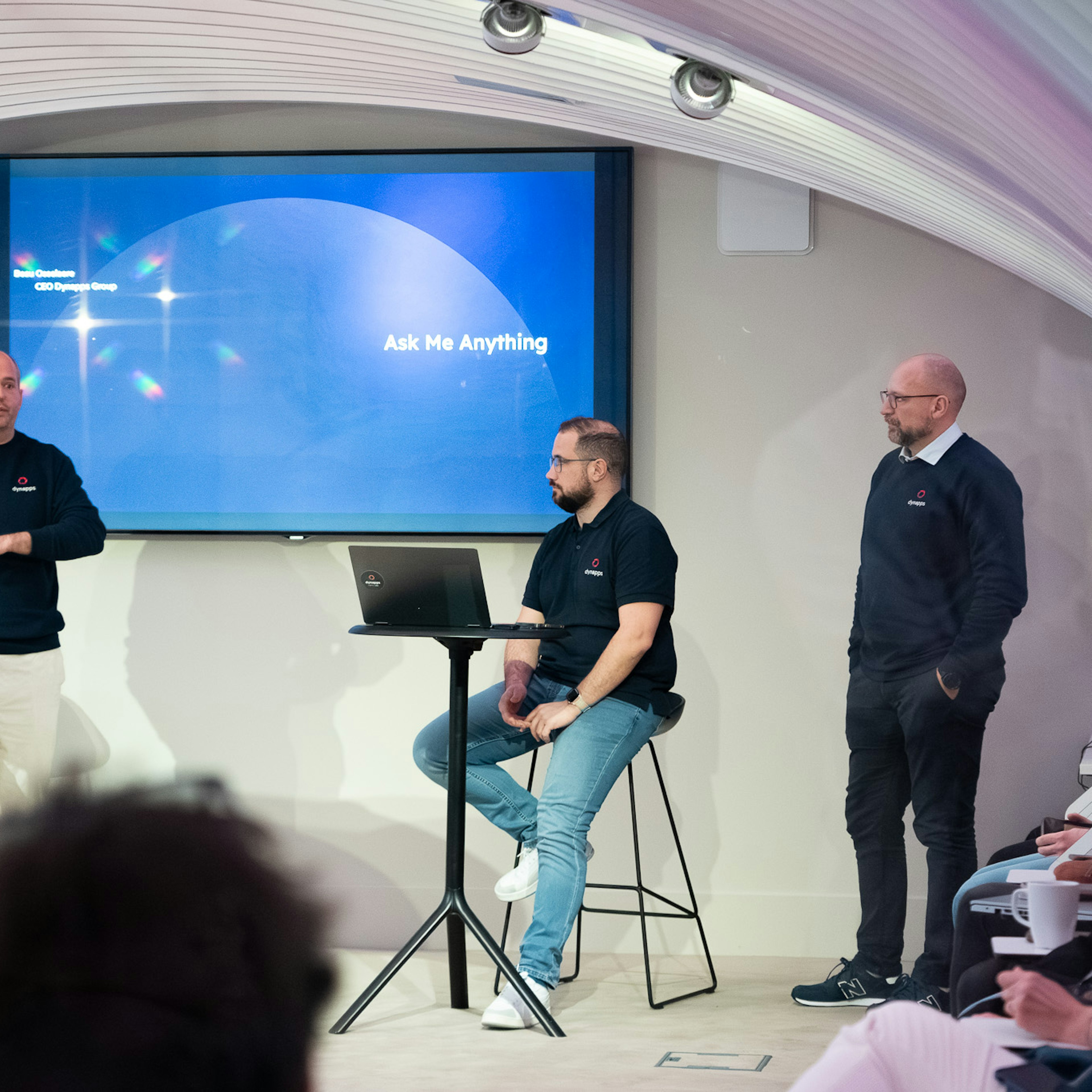
Local teams to build an Odoo project tailored to your business
Choosing an ERP is about more than selecting software. The success of an Odoo project also depends on understanding your business challenges, structuring your processes, supporting your teams, and ensuring your solution evolves over time.
This is the role Dynapps plays for SMEs and mid-sized companies: delivering practical ERP projects tailored to real business needs and designed for the everyday work of your teams.
With offices in Toulouse, Bayonne, Strasbourg, and Nantes, Dynapps supports organizations across a wide range of industries (including manufacturing, professional services, energy, healthcare, retail, and the public sector) through a collaborative, people-focused approach delivered step by step.
So, what are the key stages of the Dynapps methodology for a successful Odoo implementation?
1. Understanding your current operations before building the project
Every project begins with one essential step: listening.
Before discussing features or configuration, the Dynapps team takes the time to analyze your existing environment: business processes, current software, operational pain points, user expectations, and your company's growth objectives.
This assessment helps avoid one of the most common ERP implementation mistakes: adapting the business to the software instead of adapting the software to the business.
2. Centralizing your Business processes in a unified Odoo environment
Dynapps helps companies consolidate their business applications : CRM, accounting, manufacturing, supply chain, HR, e-commerce, and more, into a single platform that streamlines operations and connects every department.
Every project starts with a detailed analysis of business processes and process flows to build an Odoo environment that is simple, consistent, and fully aligned with day-to-day operations.
3. Designing an ERP that fits the way your business works
Every organization has its own operational requirements.
That is why Dynapps takes a business-driven approach, based on detailed process mapping and a clear understanding of users' day-to-day needs. The objective is to deliver an Odoo environment that is simple, consistent, and genuinely useful in everyday operations.
4. Finding the right balance between standard features and custom development
Thanks to its flexibility, Odoo already covers a broad range of business requirements. Dynapps' approach is to maximize the use of standard Odoo functionality whenever possible in order to simplify adoption, reduce costs, and make future upgrades easier.
When specific requirements arise, custom developments can then be added, including business process automation, third-party integrations, advanced reporting, customized workflows, and dedicated portals.
The goal remains the same: delivering an ERP solution that is simple, reliable, and truly valuable for everyday use.
5. Rolling out the project step by step to ensure successful adoption
Dynapps follows a practical, phased deployment approach. Each implementation is structured into clearly defined stages to secure every step of the project:
Configuration
Testing
Data migration
Business validation
Go-live
This methodology not only reduces project risk but also involves end users from the beginning and supports effective change management.
6. Training teams to embrace new ways of working
Even the most powerful ERP system only creates value if people actually use it.
That is why training is an integral part of every Dynapps project. Sessions are tailored to the responsibilities and day-to-day needs of each team, including:
Executive management
Sales
Finance
Logistics
Manufacturing
Customer support
The objective is not simply to teach users how to operate Odoo, but to help them understand new business processes and the operational benefits they deliver.
This approach empowers users, encourages adoption, and accelerates the development of internal expertise.
7. Supporting Your Business as It Continues to Grow
The role of an Odoo integrator does not end at go-live.
Maintenance, support, functional enhancements, continuous optimization, and version upgrades are all part of an ERP's lifecycle. As businesses evolve, Dynapps works alongside its customers to ensure their Odoo platform continues to meet changing operational needs.
This long-term partnership also helps organizations anticipate new regulatory and technological challenges, including mandatory e-invoicing requirements and the growing integration of artificial intelligence into business processes.
Putting people at the heart of ERP projects
Dynapps supports SMEs and mid-sized companies far beyond technology by combining ERP expertise, local presence, and a people-first approach to deliver tailored, sustainable solutions.

More posts like this

6 minute read
Choosing an Odoo integrator: 5 questions to ask
There are generally five main criteria that can help you effectively evaluate Odoo integrators. However, a reliable assessment depends first and foremost on what you’ve prepared before the call.

3-minute read
Interview with Leïla Chojnacki, Deputy CEO and CFO of the Obiz Group
3 minute read
Odoo 19.4: What's new? Key features and essential takeaways
Odoo 19.4 (July 2026) is a quarterly update: connection to AI agents via MCP, voice interaction, editable margins, two-tier duplicate detection, stock aging report, and continuous production.
3 minute read
AI in Odoo: What are the requirements for enabling it?
The question "Do we have the right to use Odoo's AI?" often has a simpler answer than expected.
4 minute read
Electronic invoicing 2026: Odoo and Dynapps France are ready
Electronic invoicing 2026 is just around the corner: discover how Odoo and Dynapps France are helping you prepare today for this essential transition.

4 minure read
Certified by Dynapps: Bringing Odoo Expertise to Local SMEs in France
Dynapps France is launching the “Certified by Dynapps” label, a program that provides small and medium-sized businesses with local Odoo expertise and offers independent consultants a structured framework for growing their Odoo-related businesses.
4 minute read
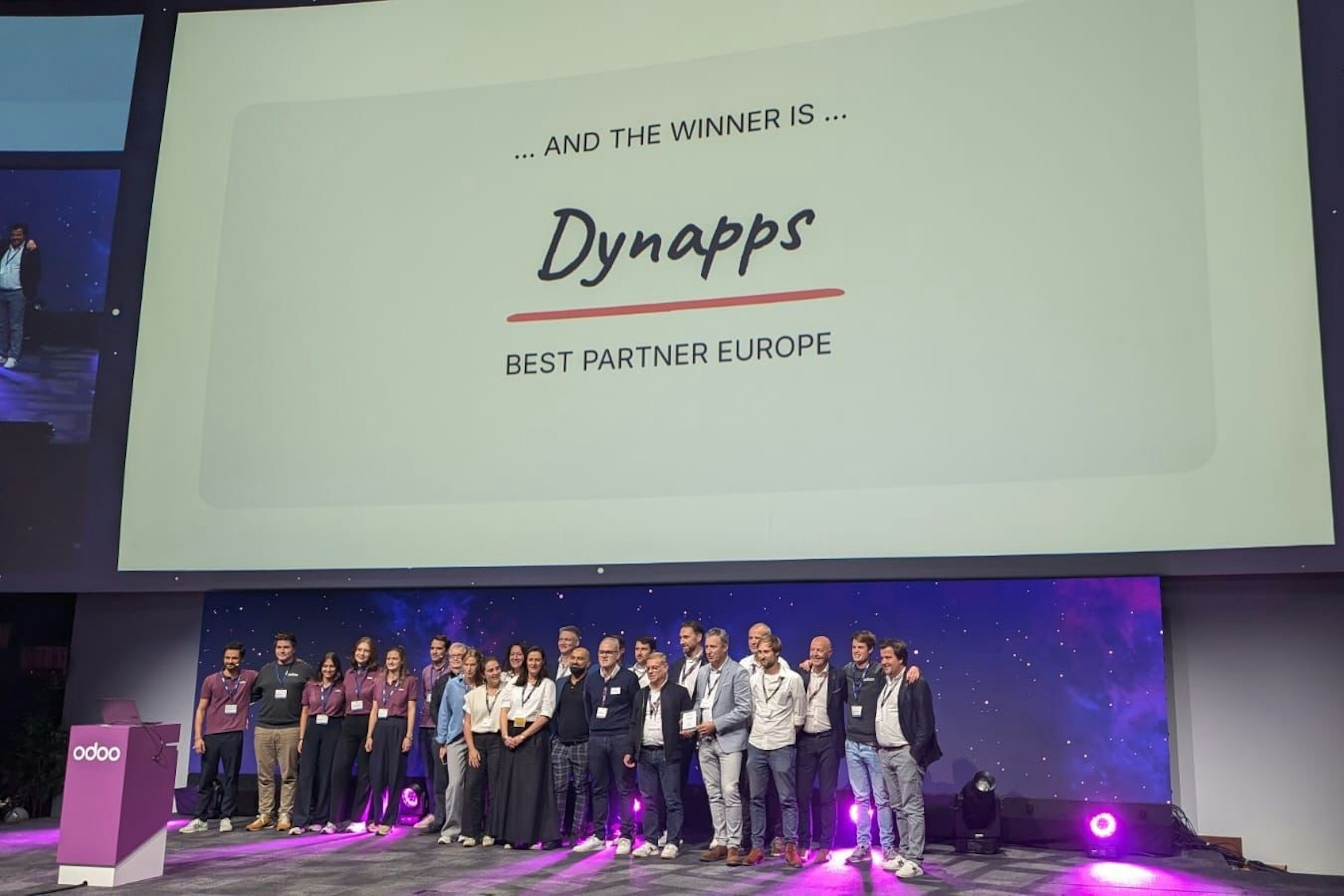
Dynapps named Best Odoo Partner in Europe
At the Odoo Experience Days in Brussels, Dynapps won the title of Best Odoo Implementation Partner in Europe, with former CEO Karel Hendrickx and the team collecting the award on 2–4 October 2024.
4 minute read
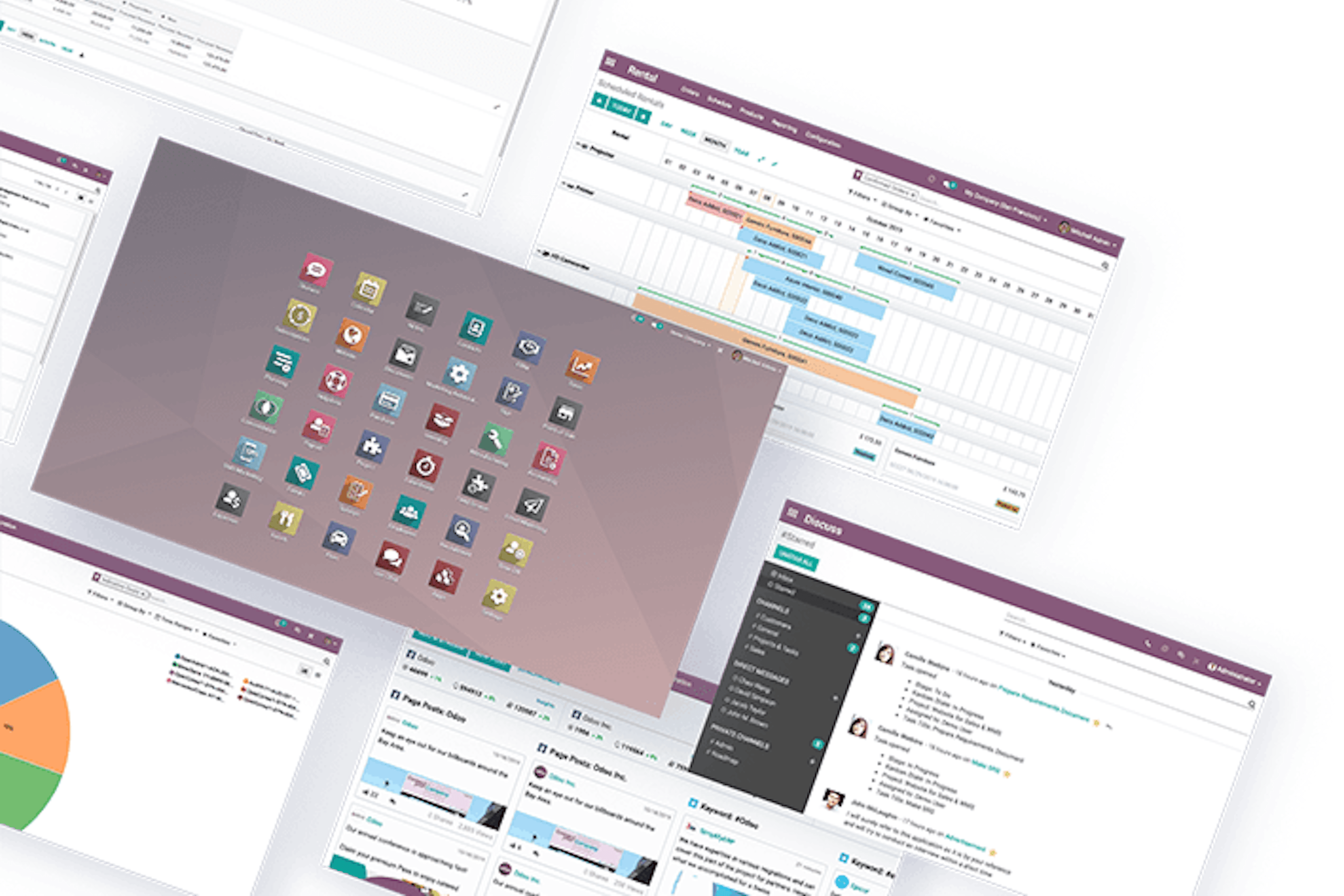
ERP vs CRM: what is the difference?
In a competitive market, businesses lean on software to operate efficiently. Two systems come up most: ERP and CRM. They serve different purposes, and they often work better together than apart.
4 minute read
What does it mean to be an Odoo Gold Partner?

5 minute read
The Best Odoo Apps for Small and Medium-Sized Businesses