
One Odoo core across Europe for a scaling EV charging operator.
How 50Five carried a single Odoo platform from a Dutch smart-home distributor in 2016 to a B2B EV charging operator managing 600,000+ charge points across twelve European countries, all without a rebuild.
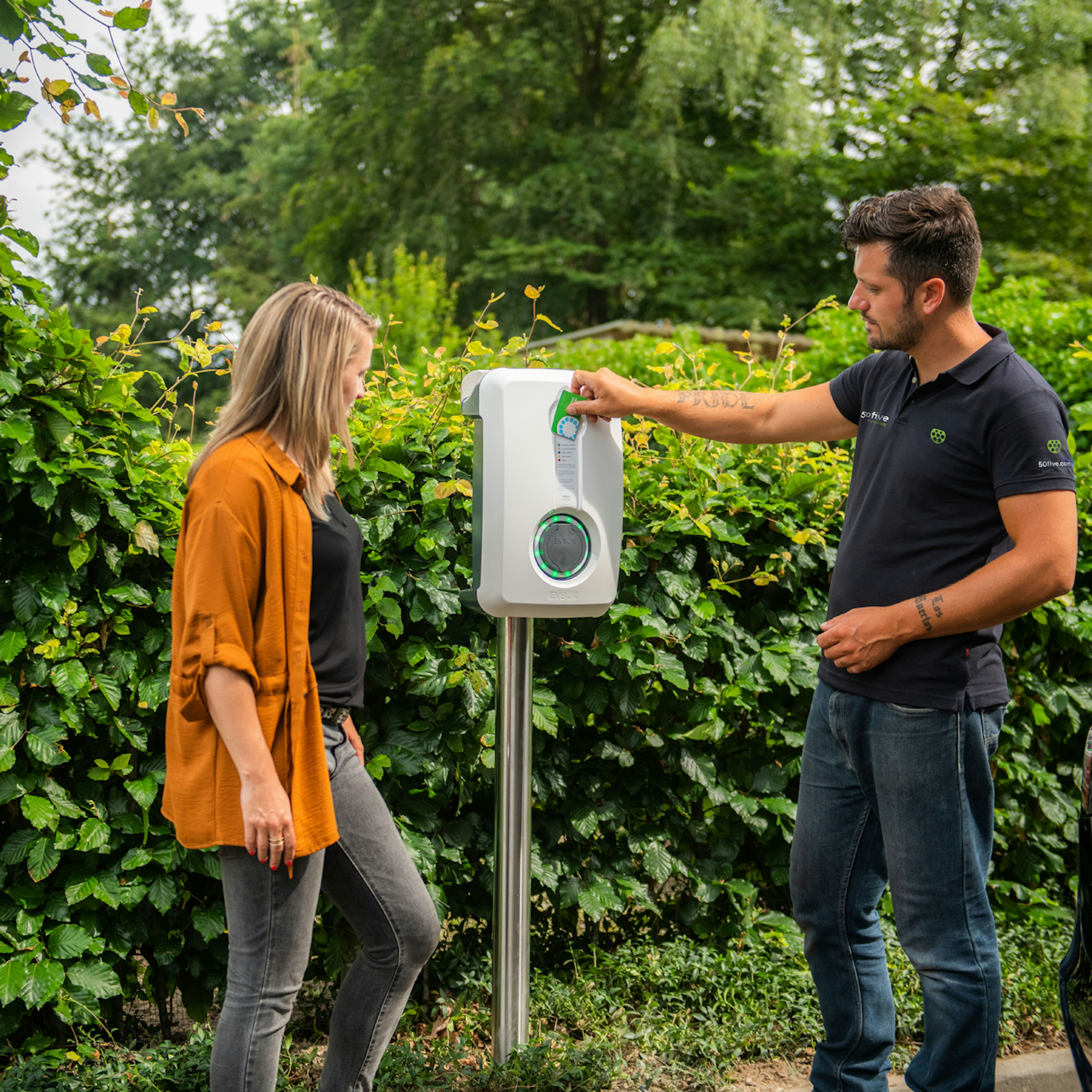
Sector
Green energy. Sub-segment: EV charging (B2B).
Footprint
Belgium, Netherlands, Luxembourg, France, Germany, United Kingdom, Denmark, Switzerland, Austria, Spain, Italy, Poland.
Scale
600,000+ charge points under management.
Dynapps partner
Since 2016.
Backing
J.P. Morgan largest shareholder; originated under ENGIE.
Before Dynapps stepped in.
Sophie Van Mulders joined 50Five as Product Owner for Odoo with a background built around the inside of an ERP. She had started her career at ENGIE, the same parent under whose wings 50Five had been founded, and had moved toward IT and specifically toward ERP almost from the beginning. Her job at 50Five was clear: own the Odoo roadmap.
The platform she stepped into was already a decade in. Dynapps had been 50Five's Odoo partner since 2016, when the company was a Netherlands-focused smart-home product distributor. EV charging was added to the offering in 2019. By the time Sophie sat down with the roadmap, the company's centre of gravity had shifted from smart home to e-mobility, a Belgian acquisition was in train, and the geographic footprint was about to outgrow the Benelux several times over.
The challenge
Where the cracks showed.
Field service, on paper
Before the field service module, installations and maintenance jobs were tracked manually. Orders on paper, time logs in spreadsheets, customer history elsewhere. Sophie: "Before, everything was manual. Now it's all automated."
Twelve countries, twelve definitions of ‘standard’
At every new country, the same work hit a different wall: language, local legislation, local admin requirements, all varying country by country. With twelve on one backbone, localisation is a permanent capability.
Multi-everything, all at once
The pace of expansion meant multi-company, multi-currency and multi-language complexity all landed at once. Odoo's base covers most of it; bringing it cleanly into a business's specific processes still requires customisation.
Why 50Five standardised on Odoo, not Microsoft Business Central.
By the early 2020s the offering had shifted from smart home to EV charging. The 2023 Belgian acquisition then added Microsoft Business Central on top of the Odoo already running in the Netherlands. Standardising on one would decide whether European expansion could happen at all.
Standardise on Microsoft Business Central
The ERP the acquired Belgian entity ran. Ruled out: the rest of 50Five was on Odoo, well established in the Netherlands. Switching would mean undoing a working platform.
A third system entirely
Considered in the broader evaluation. Lost on the math when total cost over the implementation window, time-to-go-live, and Dynapps' existing Dutch expertise were weighed together.
Extend the Dutch Odoo backbone
Continue with Odoo and Dynapps. Consolidate Belgium onto the existing platform. Design it to absorb FR, DE and the European waves to follow.
How the rollout really happened
How 50Five rolled Odoo out across twelve European countries.
2016
50Five becomes a Dynapps client. Initial Odoo build for a Netherlands smart-home distributor.
2019
EV charging added to the offering. Odoo absorbs the new line alongside smart home.
2023
Belgian acquisition. The acquired entity runs on Microsoft Business Central; 50Five standardises on Odoo. Dynapps runs it with ~6 people, ~6 key users on the 50Five side.
2024
New Odoo version live across the Benelux. Belgium, the Netherlands and Luxembourg on one backbone for the first time.
2025
France, Germany, Switzerland and Austria onboarded to the same backbone.
2026
Denmark, Spain, Italy, Poland and the UK added. Twelve countries on one Odoo platform.
What 50Five runs on Odoo: a single customer journey, end to end.
50Five runs sales, CRM, purchase, inventory, accounting, field service and helpdesk on a single Odoo backbone, plus custom charging modules and integrations to the charge-point management software and webshop. The modules run the customer journey end-to-end, from registration through quotation to dispatch. Field service carries the operational weight: technicians use the Odoo mobile app instead of paper handoffs. Helpdesk tickets link to installation and maintenance history. The 2023 consolidation ran with a small team: about six Dynapps people (functional, technical, PM) and six 50Five key users.
Modules: sales, CRM, purchase, inventory, accounting, field service, helpdesk, custom charging modules, CPMS including webshop integrations.
The discipline throughout.
The principle that defined the engagement, in Sophie Van Mulders's words: "You have to be willing to adapt your processes to the system, instead of adapting the system to your processes." The same discipline holds from the implementation side: customisation costs twice, once at build and again at every Odoo version upgrade. That discipline, kept by a small team, is what allowed the same backbone to carry the business through an acquisition, a service-line evolution and a twelve-country expansion without forking.
The hard part was the discipline of being told no.
The hard part wasn't technical. It was the discipline of being told no. Sophie Van Mulders is direct about how Dynapps worked with her team: "We were very often told 'that's really not a good idea, maybe do that later.' I really enjoyed having that kind of relationship and communication. It was quite open." A vendor that pushes back on the customer's ideas, and a customer that takes the pushback in stride rather than escalating, is not the default of an ERP project. Geert Van Baelen, account manager Dynapps, names what made it work: "of course we'd known each other for a while, so that makes it a bit easier." With a partnership running since 2016, that history was not just talk.
The same discipline shows up in Sophie's regret. Some processes that should have been automated from day one were left manual longer than they should have been, on the assumption that "we'll get to that later." Later cost more than doing it properly the first time would have. The Dynapps response, running new requests into a separate backlog and revisiting them on a fixed cadence, is the discipline the project leaned on to keep moving.

You have to be willing to adapt your processes to the system, instead of adapting the system to your processes, that's sometimes a big switch for companies.
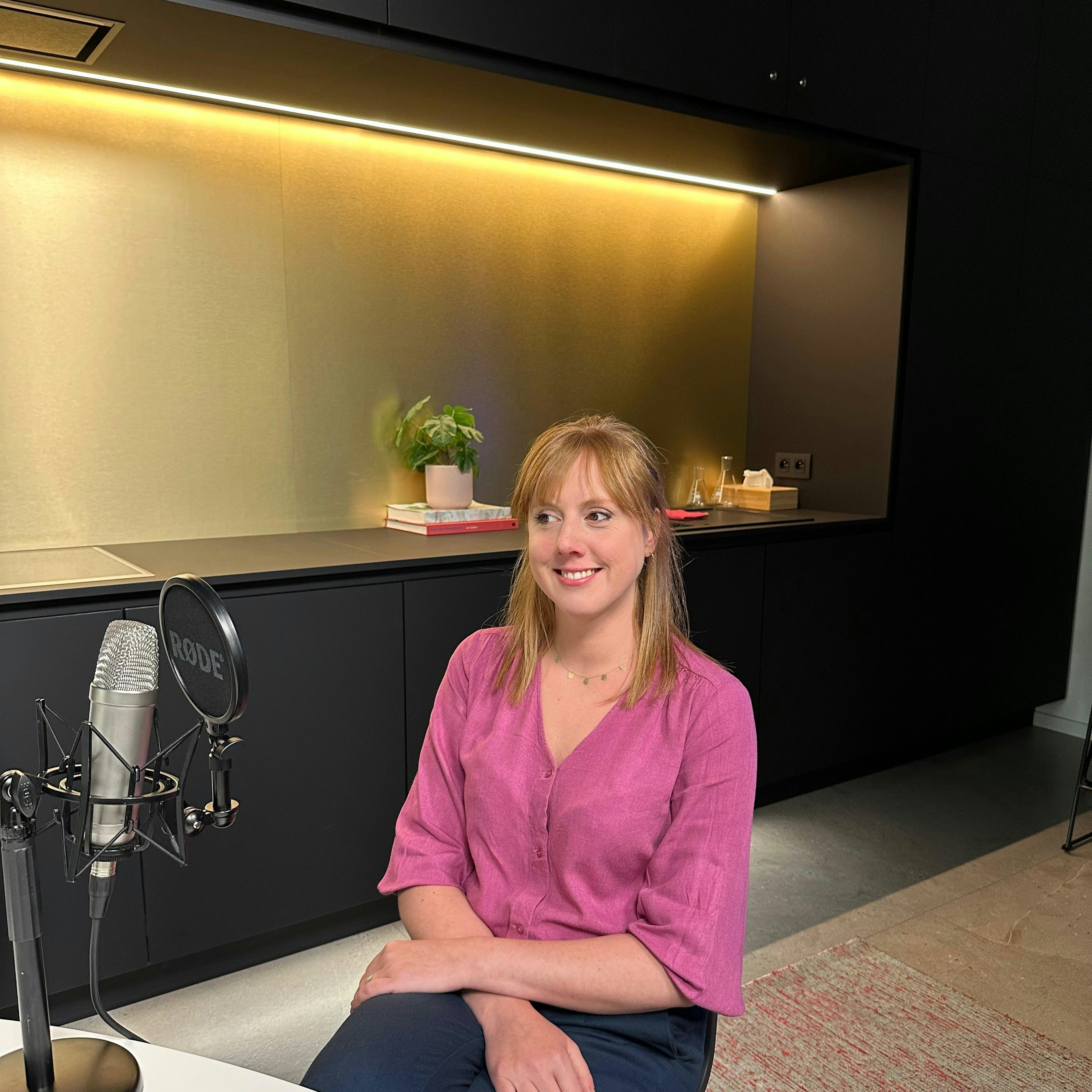
Sophie Van Mulders
Product Owner at 50FivePushback, and co-creation as the model.
Two patterns emerged from the 50Five engagement that Dynapps now applies more broadly. The first is the discipline of pushing back. The vendor habit of telling a customer 'that's not a good idea, do it later' is, in Sophie Van Mulders's account, the working norm of how Dynapps engages with 50Five rather than the exception. The second is co-creation as the operating model. Geert Van Baelen articulates it from the Dynapps side: "You learn a lot from the client. They know their business better than we do. If you combine that knowledge with our technical knowledge of Odoo, you arrive at the best solutions." Across a partnership now in its tenth year, both habits have had time to set.

The numbers
By 2024, two ERP environments had become one operating model.
One Odoo backbone, one set of processes, one set of handoffs across every border. By 2024, Belgium, the Netherlands and Luxembourg were running on the same Odoo platform. The European expansion that followed, four countries in 2025 and four more in 2026, stayed on the same backbone.
600,000+
charge points managed across Europe.
12
European countries on a single Odoo backbone.
10
years of partnership, since 2016.
7+
standard Odoo modules in production, plus custom charging modules.
How fast can we add the next country?
The platform that ran a Dutch smart-home distributor in 2016 now runs a B2B charging operation managing 600,000+ charge points across twelve European countries. Same Odoo, same partner. The first question, can the system absorb the next change, was answered when the offering moved from smart home to EV charging, and again when a Belgian acquisition brought a competing ERP into the building. The new question is: how quickly can the next country, the next acquisition, the next product line be brought onto the same backbone without forking it?
If this sounds familiar, let’s talk.
Wherever your business is heading and wherever it's getting stuck, an expert who has run this kind of work is the right person to start with, before you commit to a direction or a platform.
More stories like this
- Food & beverage
Food & beverage
Cazes: Odoo at the counter, SAP for the group books
Cazes moved its boutique and wine-fair sales onto Odoo Point of Sale, retired a clumsy SAP Fiori till, and left accounting, invoicing and alcohol duties on the Advini group's SAP S/4.
- Manufacturing
Manufacturing
How Nobi tracks every smart lamp from the Belgian assembly line to the care room.
A fast-growing health-tech manufacturer tried to stand up Odoo itself, hit a wall on serial-number traceability, and turned to Dynapps to clean up the setup and rebuild the flow, from component picking to a fully documented, serial-tracked finished product.
- Retail & wholesale
Retail & wholesale
Ergonomio replaced a twenty-year custom FileMaker webshop with one Odoo platform.
Moving from a bespoke FileMaker system to standard Odoo meant rebuilding every product record and letting go of a two-decade-old way of working.
- Energy & utilities
Energy & utilities
One Odoo platform for a multi-company energy consultancy: Tunérgia replaces Telegram, Excel and scattered tools
After sixteen years on paper, Excel and Telegram, Tunérgia put its multi-company energy consultancy onto one Odoo platform with Dynapps: leads, projects, signatures and surveys in one traceable place.
- Food & beverage
Food & beverage
One Odoo template across 14 Puratos production sites in four continents
Belgian family-owned ingredients manufacturer, 75 production units across 55 countries. Kept SAP at the largest sites; built one Odoo template for the smaller acquisitions.
- Financial services

Financial services
One Odoo backbone, from 100 to 36,000 leased bikes
Cyclis Bike Lease grew from a four-founder startup in Hasselt to 36,000+ leased bikes. Dynapps replaced the founders’ DIY setup with a single Odoo platform that scales with the business.
- Laboratories
Laboratories
Seven specialised labs on one integrated Odoo and LIMS platform
Seven specialised lab departments across Oman, 65,000 samples a year. The group replaced a legacy LIMS and added an ERP on one integrated Odoo and LIMS platform in four months.
- Energy & utilities
Energie en nutsbedrijven
Sensorfact heeft het inkopen op basis van intuïtie vervangen door Odoo
Nederlandse klimaattechnologie-startup, met meer dan 200 medewerkers die 1.600 industriële klanten in 40 landen bedienen. Odoo heeft binnen vijf maanden het op gevoel inkopen vervangen door één systeem voor inkoop, voorraadbeheer, boekhouding en verkoop.
- Retail & wholesale

Retail & wholesale
One Odoo across sales, purchasing, accounting: four-month cutover
Swiss distributor of corporate clothing and promotional products, with 13 users on Odoo. One platform now covers sales, purchasing and accounting, ending a multi-year search.
- Retail & wholesale
Retail & wholesale
One Odoo backbone for a B2B safety distributor, with 95% of orders flowing through the web shop
A Spanish B2B distributor of high-visibility safety gear moved off a custom legacy system onto Odoo. A bulk-order grid on standard e-commerce now carries 95% of its orders.